

NEWS
What are the types of jacks in road rescue tools?
Release time:
2024-05-20
The jacks in road rescue tools mainly include five types: rack jacks, screw jacks, hydraulic jacks, inflatable jacks, and scissor jacks. These five types of jacks each have their own unique design principles and applicable scenarios, collectively forming a tool system that covers diverse needs such as household vehicles, heavy vehicles, and off-road rescue.
Rack jacks are commonly used in household cars and come in two shapes: "herringbone" and "diamond". The former is lightweight and easy to store, suitable for small cars, while the latter is more stable and suitable for SUVs. Spiral jacks rely on self-locking threads, which provide strong support but have a large weight and slow lifting. They are commonly used for heavy truck maintenance. Hydraulic jacks use hydraulic pressure to achieve rapid lifting and lowering, with a load capacity of up to 3 tons, and are commonly used tools in auto repair shops. The inflatable jack uses vehicle exhaust gas to inflate, with a light weight and a maximum load capacity of 4 tons, designed specifically for self rescue in harsh environments of off-road vehicles. The scissor jack adopts a scissor structure and screw transmission, with a lightweight design but labor-intensive operation. It is recommended to choose the 3T specification for small cars.
Different types of jacks have their own advantages and disadvantages in portability, load-bearing capacity, and operational efficiency. When selecting, it is necessary to consider the vehicle type, load requirements, and usage environment comprehensively. In practical use scenarios, the differences in the characteristics of different jacks will directly affect rescue efficiency and safety. The "herringbone" shape of the rack jack is easy to operate, but due to its narrow support structure, it needs to be paired with a hardwood board to distribute pressure when used on soft ground; The "diamond shaped" design enhances stability by widening the support base, making it more suitable for SUV's temporary tire changing needs on unpaved roads.
Spiral jacks, with their self-locking physical properties, can stably support heavy trucks even in the absence of power or hydraulic assistance. However, its slow lifting speed requires the operator to have enough patience, usually requiring a wrench to gradually turn the screw. The single lifting height is limited, making it more suitable for planned heavy vehicle maintenance operations. The hydraulic transmission design of hydraulic jacks makes them highly favored in auto repair shops. Universal hydraulic jacks can be adapted to most household cars and light trucks, while specialized hydraulic jacks optimize support points for specific vehicle chassis structures. Electric hydraulic jacks further improve lifting efficiency and are widely used in the maintenance of large construction machinery.
The usage logic of an inflatable jack is quite unique, requiring the connection of the exhaust pipe to the vehicle's exhaust pipe and the control of the lifting height by adjusting the inflation amount. But it has extremely high requirements for airtightness. If the pipe interface leaks or the inflation speed is too fast, it may cause uneven force on the jack, leading to overturning. Therefore, it is more suitable for experienced off-road enthusiasts to use in extreme environments such as mud and sand.
The transverse screw transmission structure of the scissor jack determines its operation mode, and the user needs to rotate the screw to drive the scissor arm to unfold. Continuous force is required during the lifting process, which poses certain difficulties for female users or those with weaker physical strength. However, when folded, it only occupies a small portion of the spare tire slot in the trunk, and the 3T specification's load-bearing limit is sufficient to cover the weight requirements of most family sedans, making it the preferred choice for many car owners to carry with them.
NEWS

Market performance of ratchet fixed belt export
According to publicly available data as of May 2026, the ratchet strapping belt (also known as ratchet tie strap or ratchet tensioner), as an automotive accessory and logistics fastening tool, has performed exceptionally well in the export sector, particularly in the North American market, emerging as a "dark horse" product in cross-border e-commerce. Below are the key points from related export news:

What are the types of jacks in road rescue tools?
The jacks in road rescue tools mainly include five types: rack jacks, screw jacks, hydraulic jacks, inflatable jacks, and scissor jacks. These five types of jacks each have their own unique design principles and applicable scenarios, collectively forming a tool system that covers diverse needs such as household vehicles, heavy vehicles, and off-road rescue. "The parties involved must identify themselves within 20 days of the start of the investigation."

Auto Industry Could Be Key To Japan And German Manufacturing Recovery
Manufacturing in the two largest advanced economies in Asia and Europe is taking a hit, according to separate data from Japan and Germany on Feb. 21. Some argue that the importance of the auto industry in the recovery phase cannot be ignored.

Industry 2050: How Clean Manufacturing Can Be A Win-win Proposition
Now that more and more companies are realizing the economic and environmental benefits of investing in production methods and technologies that exclude the dirty work of making products, clean manufacturing is no longer an oxymoron.
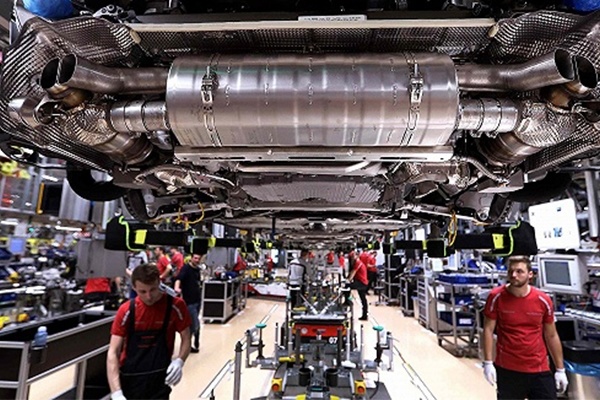
Auto Industry Could Be Key To Japan And German Manufacturing Recovery
Manufacturing in the two largest advanced economies in Asia and Europe is taking a hit, according to separate data from Japan and Germany on Feb. 21. Some argue that the importance of the auto industry in the recovery phase cannot be ignored.
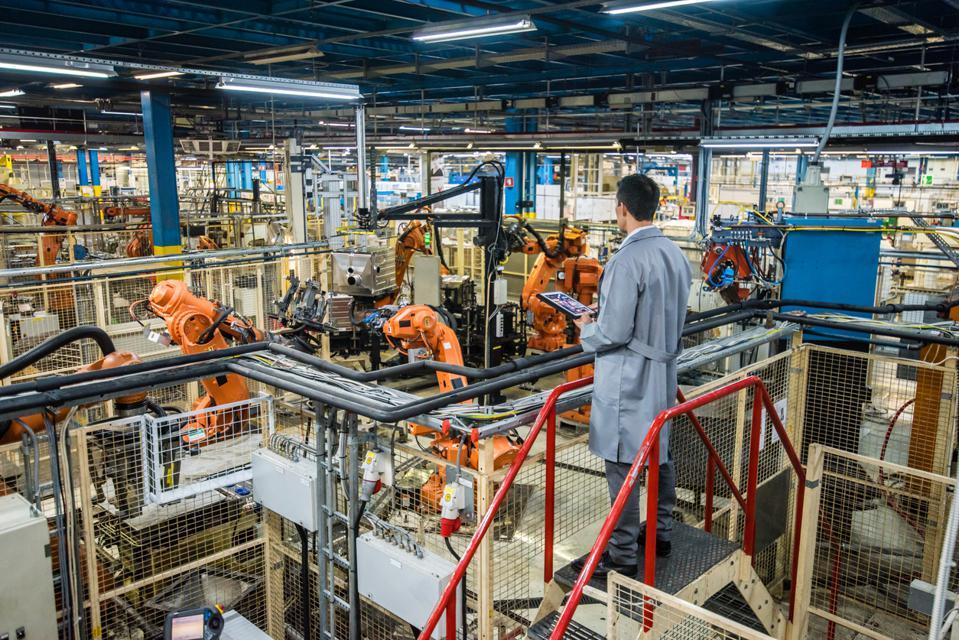
Industry 2050: How Clean Manufacturing Can Be A Win-win Proposition
Now that more and more companies are realizing the economic and environmental benefits of investing in production methods and technologies that exclude the dirty work of making products, clean manufacturing is no longer an oxymoron.
ONE MORE PLAN, ONE MORE CHOICE
Contact us for more product customization information and pricing
*If you have any questions, please contact us!
Contact us immediately for more possibilities!


YOUWANG MACHINERY
Tel:86-180-6352-9915
WhatsApp:8618063529915
E-mail:lucy@lcywjx.com
Add: Zhengjia Industrial Park, Liaocheng City, Shandong Province
QR Code